PROBLEM
The hotline receives a large volume of work orders with high complexity in disposal
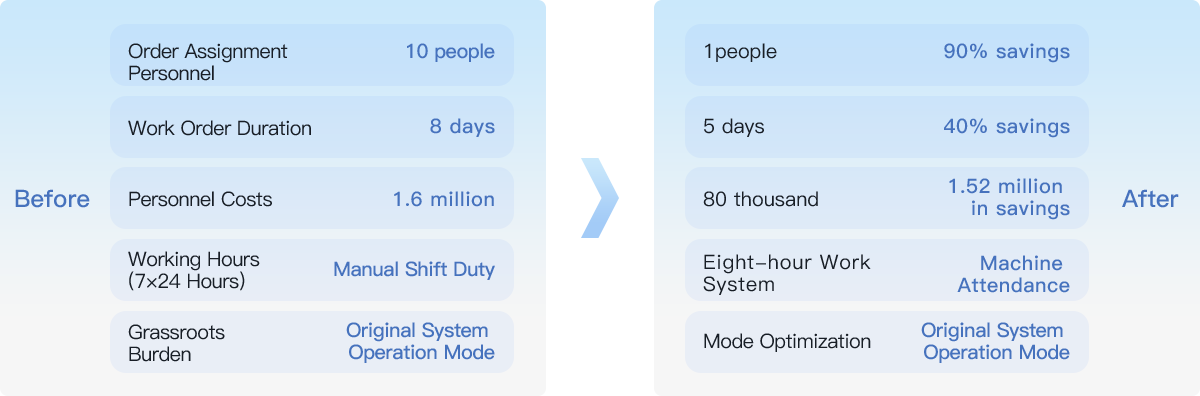
The contradiction between heavy workload and insufficient staffing is prominent: The annual number of work orders processed exceeds 600,000, ranking first among all districts in the city and accounting for nearly 1/5 of the total across the city; the ratio of work orders to the district's total population is close to 1:7; the average number of work orders handled per person per day is 170 (compared with only 40 in other districts). The number of work orders has nearly tripled, while the number of staff has decreased instead of increasing.
Coordinating and handling work is highly challenging: The district has complex conditions, as it is located in an urban-rural fringe area with a large floating population and diverse public demands. It involves more than 470 livelihood-related issues, and is associated with 48 functional departments, 24 towns and sub-districts, as well as over 1,000 professional offices, villages and communities across the district, resulting in high operational complexity and great coordination difficulties.
MEASURES
Achieve seamless work order assignment
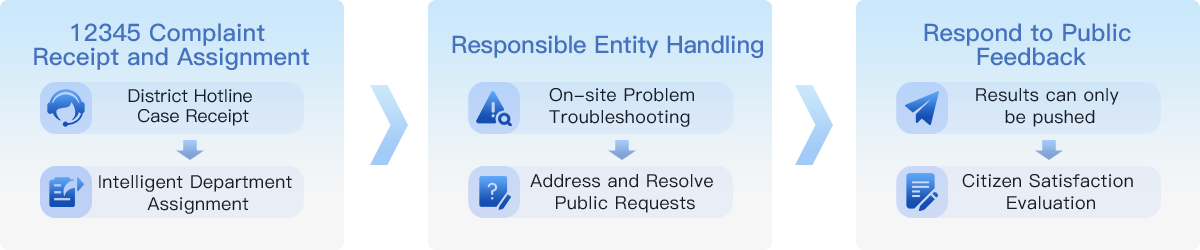
Intelligent Work Order Distribution: By aggregating 300,000 historical hotline work orders across the district, we have trained and generated work order assignment rules tailored to Baiyun’s actual conditions through machine learning technology. These rules accurately match public demands with the responsible handling departments, basically achieving seamless work order assignment.
Dynamic Data Analysis: By leveraging AI analytical capabilities such as NLP semantic analysis algorithms and GES graph engine computing, we have built a four-in-one Baiyun Resident Well-being Index System covering safety, comfort, health and housing. It conducts early warning and analysis on high-frequency and sudden hotspot demands of groups, realizing the transformation from "responding to and resolving complaints upon receipt" to "addressing issues before complaints are filed".
EFFECTS
Ranked first in the city's hotline assessment for three consecutive years
(1)It took the lead in establishing a hotline intelligent handling system among the 11 districts in the city, with both the intelligent transfer rate and order assignment accuracy rate remaining above 80%. It has ranked first in the city's hotline assessment for three consecutive years.
(2)Data Empowering Governance: In 2024, a total of 1,348 key hotline clues and 33 special hotline reports were provided to industry authorities including political and legal affairs, discipline inspection, human resources and social security, public security, ecological environment, and fire brigades, supporting targeted policy-making.
(3)Transformation of Knowledge Achievements: It has obtained 2 invention patents, 1 software copyright and 1 data intellectual property registration, and is the first government service hotline system in the province that has applied for and obtained invention patents with government departments as the main applicant.
(4)Inter-unit Exchanges and Research Visits: The Administrative and Civil Service Bureau of Macao organized two special visits with a 36-member cross-departmental delegation. Meanwhile, the Hunan Provincial Government Administration and Service Bureau, as well as sister districts in Guangzhou including Liwan, Tianhe, Huangpu, Huadu, Panyu and Conghua, have paid repeated visits.